Show Mobile Navigation
Powered by Blogger.
Mystery
Showing posts with label Mystery. Show all posts

Friday, October 24, 2014

Exocoetidae: The Fish That Flies

XPlanet - 10/24/2014 08:50:00 PM
Exocoetidae, commonly called Flying Fish, is a family of fishes aptly named for their ability to emerge out of the water and glide for long distances with their outstretched pectoral fins. Their streamlined torpedo shape helps them gather enough underwater speed to break the surface, and their large, wing-like fins get them airborne. Once in the air, these fishes can glide over considerable distances. Their flights are typically around 50 meters, but some fishes have been recorded to fly up to 200 meters or more. Some species of flying fish have enlarged pelvic fins as well as enlarged pectoral fins, which allows them to fly further than two winged gliders (up to 400 meters), and have far greater maneuverability. These fishes are known as four-winged flying fish.

flying-fish-4

To glide upward out of the water, a flying fish moves its tail up to 70 times per second. It then spreads its pectoral fins and tilts them slightly upward to provide lift. At the end of a glide, it folds its pectoral fins to reenter the sea, or drops its tail into the water to push against the water to lift itself for another glide, possibly changing direction. The curved profile of the "wing" is comparable to the aerodynamic shape of a bird wing. The fish is known to take advantage of updrafts created by air currents to increase its time of flight.

Flying fish are thought to have evolved this remarkable gliding ability to escape predators, of which they have many. Their pursuers include mackerel, tuna, swordfish, marlin, and other larger fish. Unfortunately, this evasive maneuver is not enough to escape the biggest predator on earth – humans.
Flying fish is commercially fished in Asian countries such as Japan, Vietnam and China, including the Caribbean where it’s a coveted delicacy. In Japanese cuisine, the fish is used to make some types of sushi. It is also a staple in the diet of the Tao people of Taiwan. In Barbados, flying fish were threatened by pollution and overfishing, changing the occurrences of flying fish in the waters off of Barbados. This sparked a fishing controversy between Barbados, and Trinidad and Tobago.

flying-fish-3
flying-fish-11
flying-fish-12
flying-fish-1
flying-fish-2
flying-fish-5
flying-fish-6
flying-fish-7
flying-fish-8
flying-fish-9
flying-fish-10

Sources: WikipediaNat GeoEOL

Psychedelic Stalactite Formation at Avshalom Cave, Israel

XPlanet - 10/24/2014 08:49:00 PM
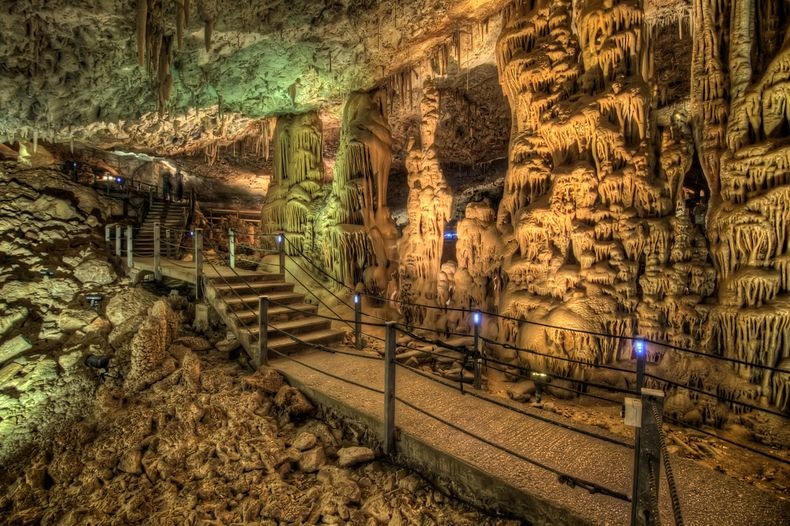
Avshalom Cave also known as Soreq Cave or Stalactites Cave is located on the western slopes of the Judean mountains near Bet Shemesh in Israel. The 5000 square meters cave has one of the most impressive collection of stalactites and stalagmites formed in a variety of patterns. Some of the stalactites hanging from the ceiling of the cave are up to four meters long, and in some cases they fuse with stalagmites growing from the floor. Other formations resemble shelves or sheets of cloth, branches, corals and clusters of grapes, among many other objects. The bizarre patterns at Avshalom Cave combined with the ghostly lightening creates a rather creepy ambience inside the cave.

Stalactites and stalagmites are formed by water flowing from the ceiling to the floor of the cave, melting limestone on the way. Over hundreds of thousands of years, each drop of mineral-laden water deposited a thin layer of calcite on the ceiling and on the ground. Given enough time these tiny layers add up to form columns of calcium carbonate called stalactites and stalagmites.

avshalom-cave-0

The Avshalom Cave was discovered by accident in May 1968 when an explosion opened a crack to reveal the magical and fantastic cave hidden beneath. According to geologists, the Soreq cave was formed around 25 million-years ago, when the mountainous range of the Judean Hills rose up above the surface of the water. The layers of limestone and dolomite rock were displaced and folded with time, forming cracks which allowed water to enter and dissolve some of the rock. While seeping through the cracks and flowing through the soil this water absorbed increasing amounts of carbon dioxide from the roots of the plants and the surrounding decay. This process that turns the water acidic is called “Karst” and helped with the cave expansion process.

Years later, when the sea retreated and lowered the ground water level, the dissolution of rock stopped and the process was reversed. Drops of water saturated with limestone solution reached the ceiling of the cave the carbon dioxide escaped and the remaining limestone crystallized, creating the huge diversity of stalactites we see today. In several still-active areas of the cave, which maintains constant heat and humidity year-round, the stalactites and stalagmites continue to grow.

The cave is named after Avshalom Shoham, an Israeli soldier killed in the War of Attrition. After its discovery, the location of the cave was kept a secret for several years for fear of damage to its natural treasures. The cave which is in the heart of the 67-dunam Avshalom Nature Reserve, declared in 1975, is today open year round to visitors.

avshalom-cave-1
avshalom-cave-2
avshalom-cave-3
avshalom-cave-4
avshalom-cave-5
avshalom-cave-6
avshalom-cave-7
avshalom-cave-8

Pacu, The Fish With Very Human Teeth

XPlanet - 10/24/2014 08:45:00 PM
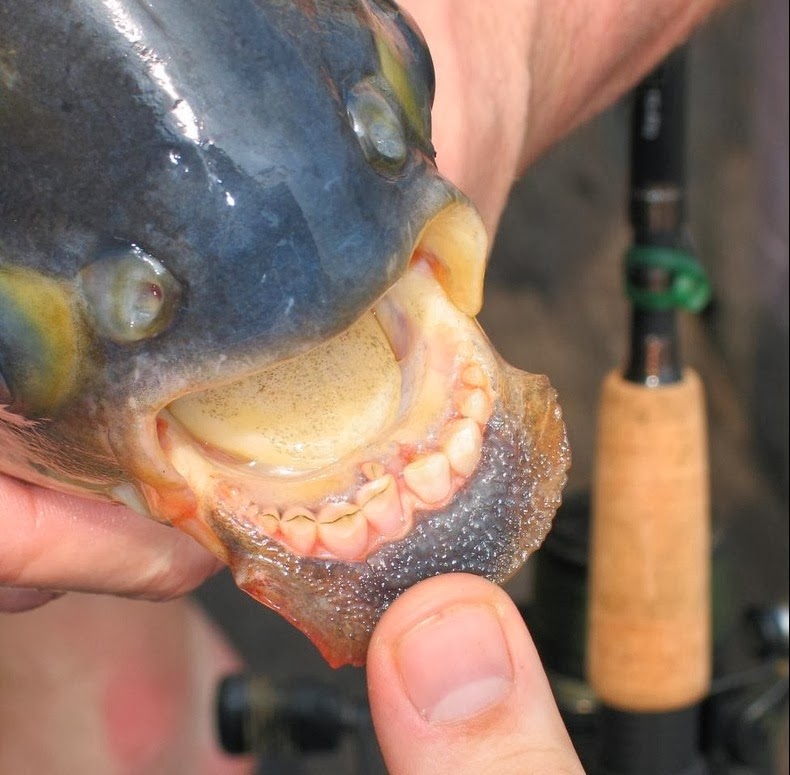
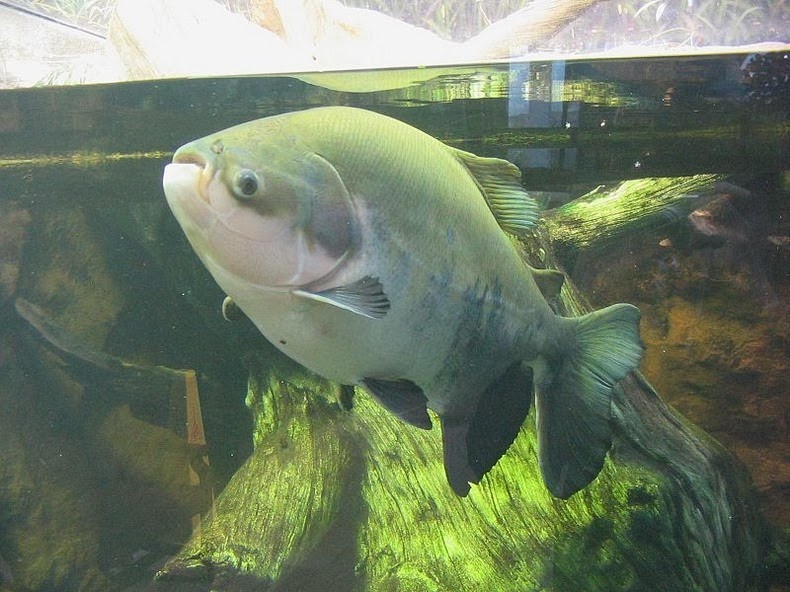
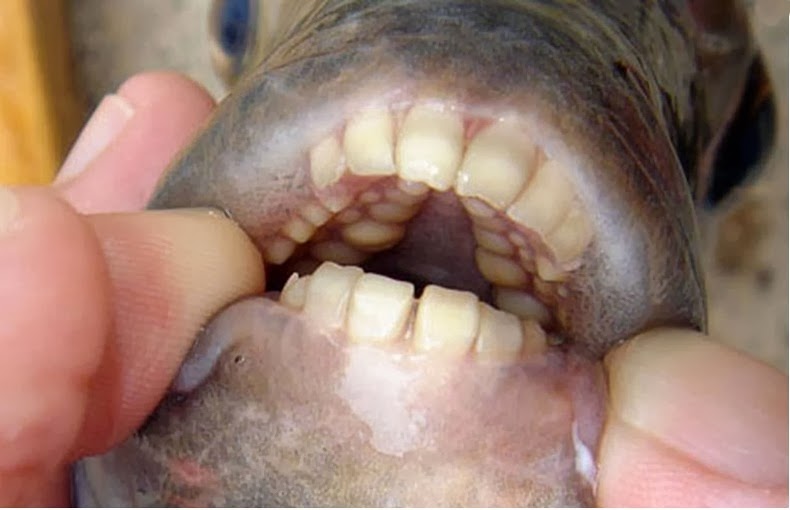
Pacu is a South American freshwater fish found in most rivers and streams in the Amazon and Orinoco river basins of lowland Amazonia, but they have also been reported as far as Papua New Guinea, where it was artificially introduced to aid the local fishing industry. Pacu is related to the meat-eating piranha, both sharing the same subfamily Serrasalminae, although they have different food habits. The piranha is a carnivorous species while the pacu is omnivorous with vegetative tendencies. The difference is evident in the structure of their teeth. Piranha have pointed, razor-sharp teeth whereas pacu have squarer, straighter teeth, that eerily resemble those of humans.

pacu-fish-6

Pacu uses its teeth mainly to crush nuts and fruits, but sometimes they also eat other fish and invertebrates. They usually eat floating fruits and nuts that drop from trees in the Amazon, and on a few occasions were reported to attack the testicles of male swimmers mistaking them to be floating nuts. This has earned them the name of "ball-cutter" after they castrated a couple of local fishermen in Papua New Guinea. So when the fish was spotted in a few odd lakes in Denmark and later in Washington, New Jersey and Illinois last year, a mild panic ensued.

While they are not aggressive carnivores like the piranha, their crushing jaw system can be hazardous. One toddler needed surgery after a pacu bit her finger at Edinburgh Butterfly and Insect World in Scotland. Commenting on the incident, Deep Sea World zoological manager Matthew Kane warned, "Pacus will eat anything, even children's wiggling fingers.

Pacus are legal to own in the United States, can be bought in aquarium stores and are easy to raise. The trouble is many aquarium owners are unaware that pacus can grow up to 4 feet long, which is way too large for a typical home aquarium. When pet pacus outgrow their fish tank, many owners end up dumping the fish in nearby lakes.

pacu-fish-1
pacu-fish-2
pacu-fish-4
pacu-fish-5
pacu-fish-7
pacu-fish-8
Aside from pacu the Sheepshead fish (Archosargus probatocephalus) also has human teeth but a little too many.
sheepshead-fish-2
Photo credit: Scientificamerican.com

A fully-grown adult sheepshead has well-defined incisors sitting at the front of the jaw, and molars set in three rows in the upper jaw and two rows in the lower jaw. It has strong, heavy grinders set in the rear of the jaw too, which are particularly important for crushing the shells of its prey. As with humans, this unique combination of teeth helps the sheepshead process a wide-ranging, omnivorous diet consisting of a variety of vertebrates, invertebrates and some plant material.

sheepshead-fish-1
sheepshead-fish-3

Sheepshead fish are also called convict fish due to the black and white bands that run down its silvery body. Photo credit

Punch Hole Clouds

XPlanet - 10/24/2014 08:43:00 PM
Punch hole clouds, also known as fallstreak hole are large circular clearings that can appear in cirrocumulus or altocumulus clouds. Such holes are formed when the water temperature in the clouds is below freezing but the water has not frozen yet due to the lack of ice nucleation particles. When a portion of the water does start to freeze it will set off a domino effect causing the water vapor around it to freeze and fall to the earth as well. This leaves a large, often circular, hole in the cloud.

Punch hole clouds have been puzzling sky gazers and scientists alike since the 1940s. A 1968 article in the magazine Weatherwise called them “A Meteorological Whodunit?”.

Because of their rarity and unusual appearance, fallstreak holes are often mistaken for or attributed to UFOs. It is only during the last decade the cause of formation of these clouds has been somewhat understood.

It is believed that a disruption in the stability of the cloud layer, such as that caused by a passing jet, may induce the domino process of evaporation which creates the hole. Such clouds are not unique to any one geographic area and have been photographed from the United States to Russia

punch-hole-clouds-1

punch-hole-clouds-2
punch-hole-clouds-6
punch-hole-clouds-8
punch-hole-clouds-9
See more pictures of Punch Hole Clouds at WeatherVortex

Curious Rock Formation of Giant's Causeway in Ireland

XPlanet - 10/24/2014 08:42:00 PM
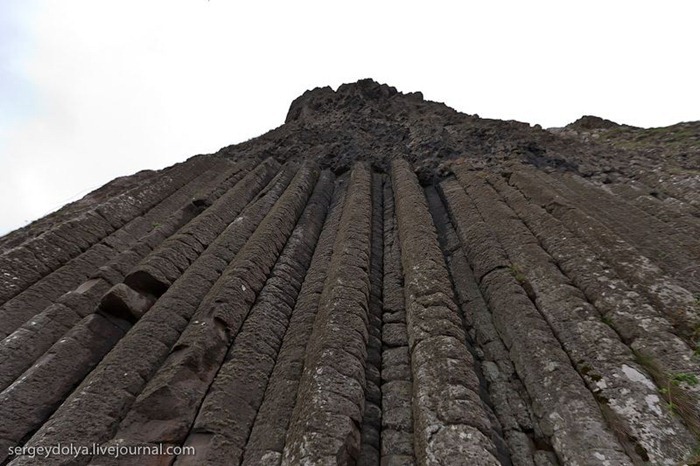
The Giant's Causeway in northeast coast of Northern Ireland, is an area of about 40,000 interlocking basalt columns, the result of an ancient volcanic eruption. The tops of the columns form stepping stones that lead from the cliff foot and disappear under the sea. Most of the columns are hexagonal, although there are also some with four, five, seven and eight sides.

giants-causeway (2)

The remarkable geological features of the region have earned it the title of the Eight Wonder of the World and established it as a major part of Ireland's heritage. For 300 years the Causeway and the cliffs of the Causeway Coast have attracted thousands of visitors from around the world. Travellers have marveled at the beauty of the formations while scientists have sought to describe and explain them.

The causeway was formed during the early Paleogene period some 50 to 60 million years ago over a long period of intense volcanic activity. Highly fluid molten basalt intruded through chalk beds to form an extensive lava plateau. As the lava cooled rapidly, contraction occurred. While contraction in the vertical direction reduced the flow thickness (without fracturing), horizontal contraction could only be accommodated by cracking throughout the flow. The extensive fracture network produced the distinctive columns seen today. The basalts were originally part of a great volcanic plateau called the Thulean Plateau which formed during the Paleogene period.

Giant's Causeway was declared a World Heritage Site by UNESCO in 1986, and a National Nature Reserve in 1987 by the Department of the Environment for Northern Ireland.

giants-causeway (1)
giants-causeway (4)
giants-causeway (5)
giants-causeway (6)
giants-causeway (8)
giants-causeway (9)
giants-causeway (10)
giants-causeway (13)
giants-causeway (17)
giants-causeway (18)
giants-causeway (3)
giants-causeway (15)

Richat Structure: Eye Of The Sahara

XPlanet - 10/24/2014 08:40:00 PM
The Richat Structure, also known as the Eye of the Sahara, is a prominent circular feature in the Sahara desert of west–central Mauritania near Ouadane. Surrounded by thousands of square miles of nearly featureless desert, this 40-50 km in diameter series of concentric circles is readily visible from space. This prominent circular feature in the Sahara desert has attracted attention since the earliest space missions because it looks like a gigantic bull’s-eye.

Richat Structure is not the site of an ancient meteor crater, as many people originally postulated. These concentric circles are actually alternating layers of sedimentary, metamorphic, and igneous rocks that were pushed upward in a symmetrical anticline, geologic dome, from below due to a small incursion of magma. The structure is a deeply eroded. The sedimentary rock exposed in this dome range in age from Late Proterozoic (2.5 billion years) within the center of the dome to Ordovician (480 million years) sandstone around its edges.

Initially interpreted as an asteroid impact structure because of its high degree of circularity, it is now argued to be a highly symmetrical and deeply eroded geologic dome. Despite extensive field and laboratory studies, geologists have found a lack of any credible evidence for shock metamorphism or any type of deformation indicative of an extraterrestrial impact.

richat-structure-6

In addition, the Richat structure lacks the annular depression that characterize large extraterrestrial impact structures of this size. Also, it is quite different from large extraterrestrial impact structures in that the sedimentary strata comprising this structure is remarkably intact and "orderly" and lacking in overturned, steeply dipping strata or disoriented blocks. A more recent multianalytical study on the Richat megabreccias concluded that carbonates within the silica-rich megabreccias were created by low-temperature hydrothermal waters, and that the structure requires special protection and further investigation of its origin.

richat-structure-3
richat-structure-2
richat-structure-4
richat-structure-5
richat-structure-1

Sources: 12
Previous
Editor's Choice