Show Mobile Navigation
Powered by Blogger.
Animal
Showing posts with label Animal. Show all posts

Friday, October 24, 2014

Exocoetidae: The Fish That Flies

XPlanet - 10/24/2014 08:50:00 PM
Exocoetidae, commonly called Flying Fish, is a family of fishes aptly named for their ability to emerge out of the water and glide for long distances with their outstretched pectoral fins. Their streamlined torpedo shape helps them gather enough underwater speed to break the surface, and their large, wing-like fins get them airborne. Once in the air, these fishes can glide over considerable distances. Their flights are typically around 50 meters, but some fishes have been recorded to fly up to 200 meters or more. Some species of flying fish have enlarged pelvic fins as well as enlarged pectoral fins, which allows them to fly further than two winged gliders (up to 400 meters), and have far greater maneuverability. These fishes are known as four-winged flying fish.

flying-fish-4

To glide upward out of the water, a flying fish moves its tail up to 70 times per second. It then spreads its pectoral fins and tilts them slightly upward to provide lift. At the end of a glide, it folds its pectoral fins to reenter the sea, or drops its tail into the water to push against the water to lift itself for another glide, possibly changing direction. The curved profile of the "wing" is comparable to the aerodynamic shape of a bird wing. The fish is known to take advantage of updrafts created by air currents to increase its time of flight.

Flying fish are thought to have evolved this remarkable gliding ability to escape predators, of which they have many. Their pursuers include mackerel, tuna, swordfish, marlin, and other larger fish. Unfortunately, this evasive maneuver is not enough to escape the biggest predator on earth – humans.
Flying fish is commercially fished in Asian countries such as Japan, Vietnam and China, including the Caribbean where it’s a coveted delicacy. In Japanese cuisine, the fish is used to make some types of sushi. It is also a staple in the diet of the Tao people of Taiwan. In Barbados, flying fish were threatened by pollution and overfishing, changing the occurrences of flying fish in the waters off of Barbados. This sparked a fishing controversy between Barbados, and Trinidad and Tobago.

flying-fish-3
flying-fish-11
flying-fish-12
flying-fish-1
flying-fish-2
flying-fish-5
flying-fish-6
flying-fish-7
flying-fish-8
flying-fish-9
flying-fish-10

Sources: WikipediaNat GeoEOL

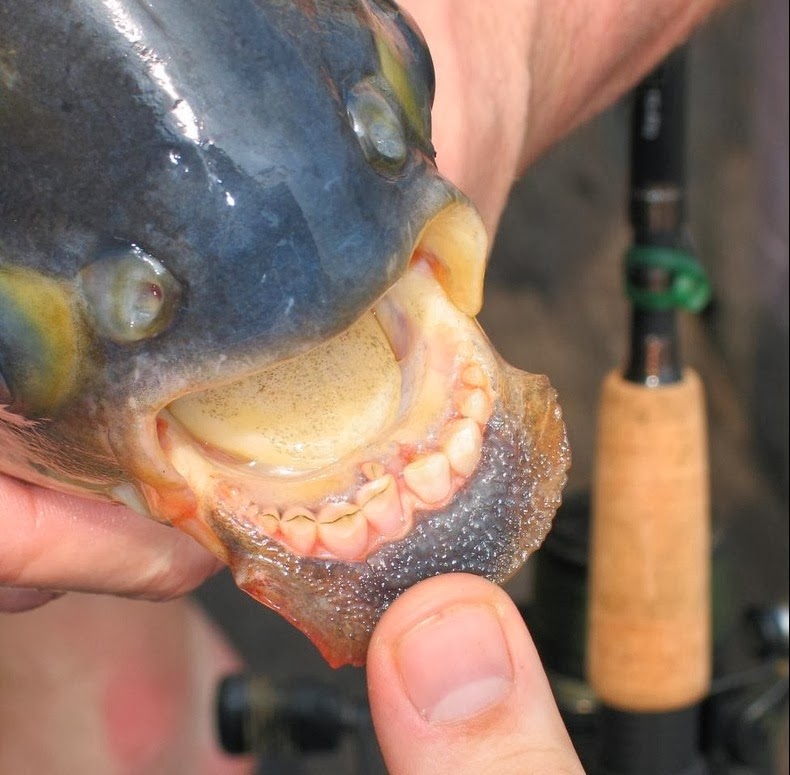
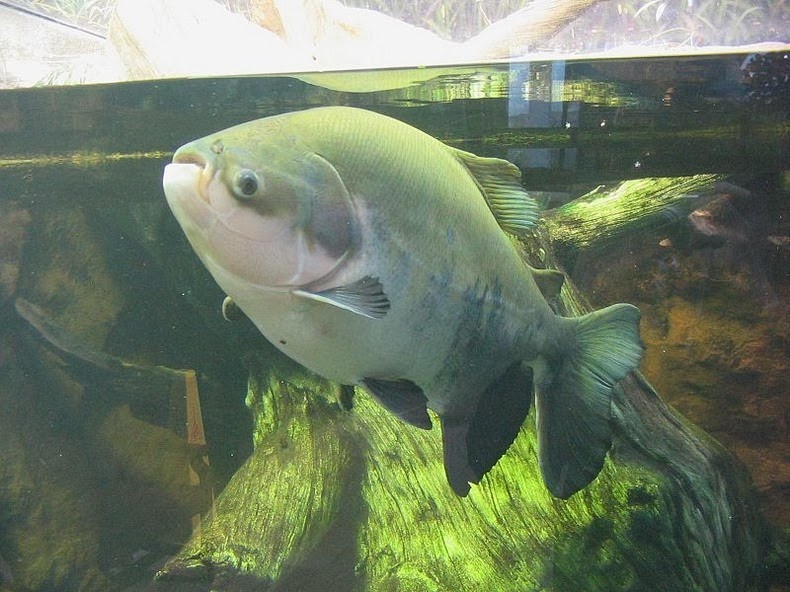
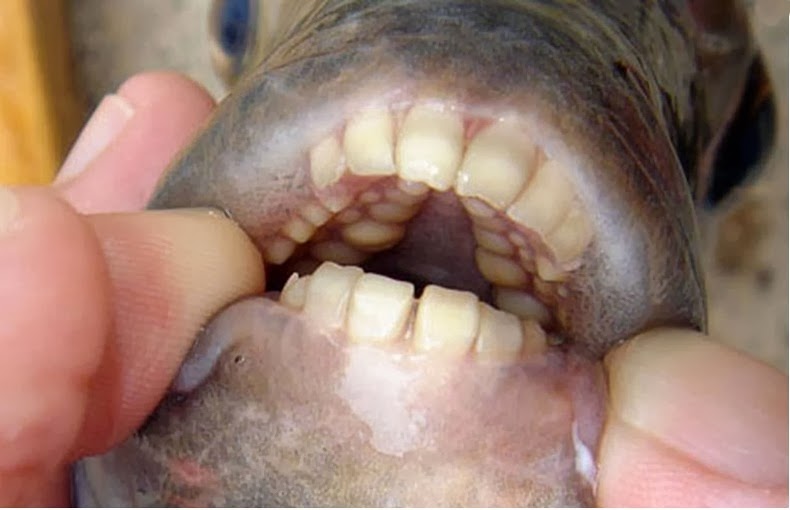
Pacu, The Fish With Very Human Teeth

XPlanet - 10/24/2014 08:45:00 PM
Pacu is a South American freshwater fish found in most rivers and streams in the Amazon and Orinoco river basins of lowland Amazonia, but they have also been reported as far as Papua New Guinea, where it was artificially introduced to aid the local fishing industry. Pacu is related to the meat-eating piranha, both sharing the same subfamily Serrasalminae, although they have different food habits. The piranha is a carnivorous species while the pacu is omnivorous with vegetative tendencies. The difference is evident in the structure of their teeth. Piranha have pointed, razor-sharp teeth whereas pacu have squarer, straighter teeth, that eerily resemble those of humans.

pacu-fish-6

Pacu uses its teeth mainly to crush nuts and fruits, but sometimes they also eat other fish and invertebrates. They usually eat floating fruits and nuts that drop from trees in the Amazon, and on a few occasions were reported to attack the testicles of male swimmers mistaking them to be floating nuts. This has earned them the name of "ball-cutter" after they castrated a couple of local fishermen in Papua New Guinea. So when the fish was spotted in a few odd lakes in Denmark and later in Washington, New Jersey and Illinois last year, a mild panic ensued.

While they are not aggressive carnivores like the piranha, their crushing jaw system can be hazardous. One toddler needed surgery after a pacu bit her finger at Edinburgh Butterfly and Insect World in Scotland. Commenting on the incident, Deep Sea World zoological manager Matthew Kane warned, "Pacus will eat anything, even children's wiggling fingers.

Pacus are legal to own in the United States, can be bought in aquarium stores and are easy to raise. The trouble is many aquarium owners are unaware that pacus can grow up to 4 feet long, which is way too large for a typical home aquarium. When pet pacus outgrow their fish tank, many owners end up dumping the fish in nearby lakes.

pacu-fish-1
pacu-fish-2
pacu-fish-4
pacu-fish-5
pacu-fish-7
pacu-fish-8
Aside from pacu the Sheepshead fish (Archosargus probatocephalus) also has human teeth but a little too many.
sheepshead-fish-2
Photo credit: Scientificamerican.com

A fully-grown adult sheepshead has well-defined incisors sitting at the front of the jaw, and molars set in three rows in the upper jaw and two rows in the lower jaw. It has strong, heavy grinders set in the rear of the jaw too, which are particularly important for crushing the shells of its prey. As with humans, this unique combination of teeth helps the sheepshead process a wide-ranging, omnivorous diet consisting of a variety of vertebrates, invertebrates and some plant material.

sheepshead-fish-1
sheepshead-fish-3

Sheepshead fish are also called convict fish due to the black and white bands that run down its silvery body. Photo credit

Buffalo Bodypainting Competition in China

XPlanet - 10/24/2014 08:37:00 PM
Artists from eight countries gathered in Jiangcheng county in China on May 18 to take part in an international buffalo bodypainting competition. The city of Pu’er has held cattle bodypainting competition for the last three years, and this year’s competition coincides with the 60th anniversary of the founding of Jiangcheng County.

A total of 48 water buffalos were covered in brightly colored body paint. Every cow was painted by a group consisting of 3 to 7 artists from United Kingdom, Italy, Germany, Finland, New Zealand, Vietnam, Laos and China. A prize money of 100,000 yuan ($16,042) was on offer for the most beautifully decorated bovine. This year, the first pace was won by a team of local schoolchildren.

buffalo-bodypainting-1

Painting on the buffalos is an ancient custom in Jiancheng derived from a legend, according to which a group of water buffaloes were once attacked by a large tiger when they were taken to the fields to graze. The tiger caught one unfortunate buffalo and as the two creatures struggled around on the field, mud and blood covered the buffalo's body. The bull looked so terrifying that the tiger got scared and ran away. After that locals started painting on their cattle to keep the predators away. The tradition later developed into a popular festival held each year to celebrate harvest and honor the cattle.

buffalo-bodypainting-4
buffalo-bodypainting-5
buffalo-bodypainting-7
buffalo-bodypainting-8
buffalo-bodypainting-9
buffalo-bodypainting-2
buffalo-bodypainting-3
buffalo-bodypainting-6

Sources: GBTimes / ChinaDaily / Time
Previous
Editor's Choice